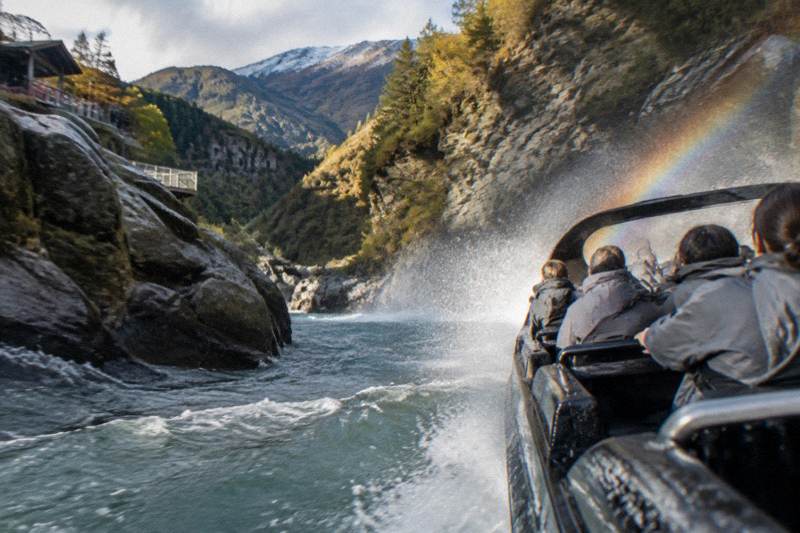
Do You Get Wet On The Shotover Jet?
How wet the Shotover Jet canyon ride actually gets you, what to wear, what to do with your phone, and how it compares with KJet and Skippers Canyon for splash.
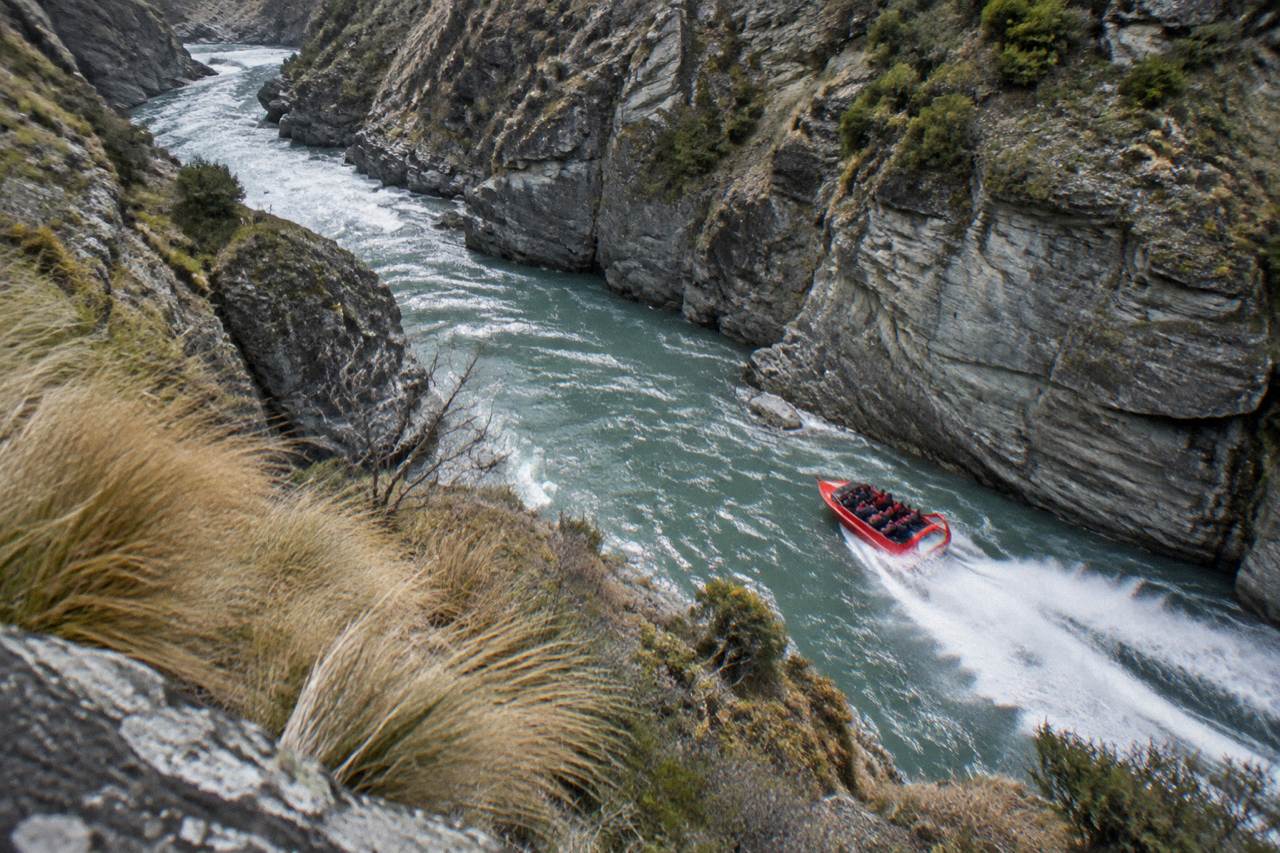
Yes, most riders get at least splashed, and people in the front rows or on the outside seats often get properly wet. The boat runs at speed through shallow water and spins 360 degrees in the narrow Shotover canyons, and spray comes over the bow and the sides during those manoeuvres. It is a splash-and-spray ride rather than a swim, but anyone who turns up in a cotton hoodie and jeans on a cold day will regret it. Shotover Jet provides life jackets and does not provide spray jackets, so the waterproof layer is the rider's job.
The honest answer has three parts. First, the geometry of the boat: jet boats built for canyon work are low-sided and fast, and water that would stay outside a bigger hull arrives inside this one. Second, the manoeuvres: Shotover Jet says its drivers run 360 degree spins, and a spin throws a curtain of spray off the bow that lands on whoever is sitting forward. Third, the river itself: the Shotover is a shallow, fast alpine river, and Shotover Jet says its boats run in shallow water. Shallow fast water plus spins plus a low hull equals a wet strip down one side of your body more often than not.
What the ride is not is a soak-everyone-every-time event. Expect to come back damper at the shoulders than at the waist, and the amount can vary with where the boat is heading relative to the wind, how close to the canyon walls the driver is working, and which seat a rider happens to be in. Seating cannot be guaranteed, so nobody can promise a dry spot or a wet one before boarding, KJet says centre seats are drier but that seating cannot be guaranteed.
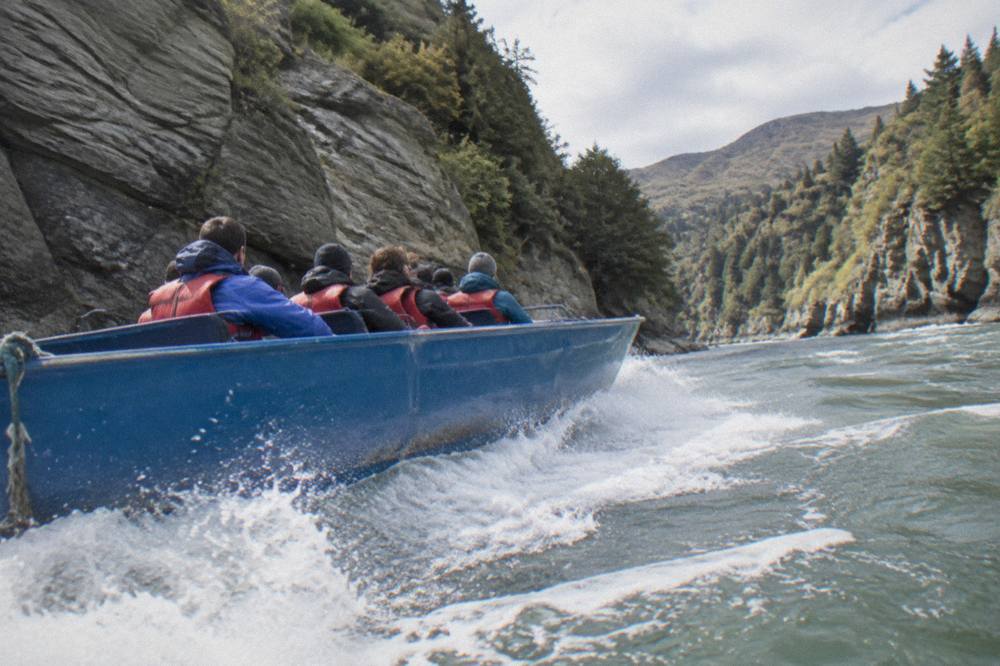
The practical takeaways are simple and cheap. Bring a genuine waterproof layer, a warm layer underneath it for winter, and a change of clothes in the car for small children. Lock everything else in the complimentary lockers at the base. Riders who follow those three rules tend to treat the spray as part of the fun, which is more or less how the operator sells it.
If the canyon ride is the one being planned, the 25-minute Shotover experience is the natural first comparison.
How Wet Does The Shotover Jet Actually Get You?
Expect damp to wet, with the wettest moments coming during the 360 degree spins, and the front and outside seats catching the most spray on nearly every departure. Riders in the centre seats and back rows usually stay drier, though seating cannot be guaranteed before boarding. The operator's own guidance treats spray as a certainty: it tells riders to bring a waterproof layer because no spray jackets are provided at the base. In summer, the spray is a feature. In winter, it is the difference between a good afternoon and a miserable one.
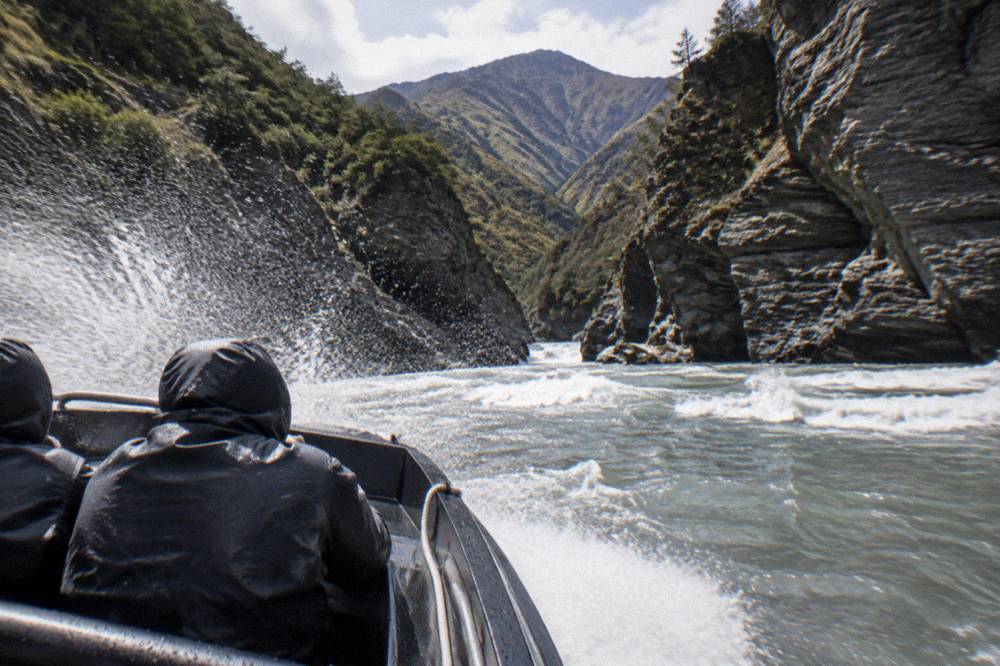
The spin is the moment to brace for. When the driver hauls the boat through a 360, the nose digs slightly and a fan of water lifts off the bow. Depending on the wind and the angle, that fan lands on the front two rows, the outside seats, or, on an unlucky day, most of the boat. Expect a familiar pattern: a cold slap of spray, laughter, then another one a minute later. Between spins, the ride is mostly dry, with occasional wall wash when the boat turns hard inside the canyons.
Row placement matters more than most first-timers expect. The boats carry up to 14 passengers plus a driver, and the bow seats sit lowest relative to the spray line. Anyone who absolutely must stay dry, perhaps with a camera commitment straight after the ride, should mention it at check-in and accept that nothing can be promised.
Season changes the stakes more than the water does. Dress for spray: a wave hitting bare arms is bracing. In winter the air temperature does the rest: a soaked jumper stays wet for hours, and the drive back to town in a wet layer is genuinely unpleasant. There is a reason the winter packing advice is a hat, gloves and a real shell jacket rather than a fashion jacket.
The question of clothing is covered in full in the Shotover Jet packing guide, but the short version for wetness is: waterproof shell, warm mid-layer, closed shoes, and nothing you would be sad to see splashed. Sunglasses help against both sun and spray. Life jackets are provided and mandatory, so the layer under that is what determines comfort.
One last framing that helps first-timers: the spray is concentrated, not constant. A 25-minute ride contains maybe a handful of genuinely wet moments, and most of the intervening minutes are wind and scenery. Riders who dress for the wet moments enjoy all of them.
What Should You Wear To Stay Dry On The Shotover Jet?
Wear a proper waterproof jacket with a hood or a high collar over a warm layer, plus long trousers and closed shoes, and that outfit will handle almost everything the canyon throws at you across the full 25 minutes on the water. Since Shotover Jet does not provide spray jackets, your own weather protection matters, so stash a spare layer and a dry towel in the complimentary lockers.
The waterproof layer deserves the most thought. A rain shell with taped seams and a decent zip does the job; a fashionable windbreaker or a fleece worn alone does not, because fleece holds water against the skin and windbreaker fabric wets through within a couple of spins. In the coldest months, gloves and a beanie matter as much as the jacket, because hands and head take the spray first and the boats run through the day in the open. Heated handrails take the edge off between manoeuvres, the operator says, but they do not dry a wet jumper.
Footwear and trousers are the underrated items. Sandals on a cold river are a fast route to numb feet, and denim stays wet for hours once soaked. Quick-dry trousers or anything that dries on the walk back up the track from the river beach is the better call. Anyone heading to dinner or a winery straight after the ride should simply bring a full change of clothes: the base has toilets and lockers to hold the wet kit afterwards.
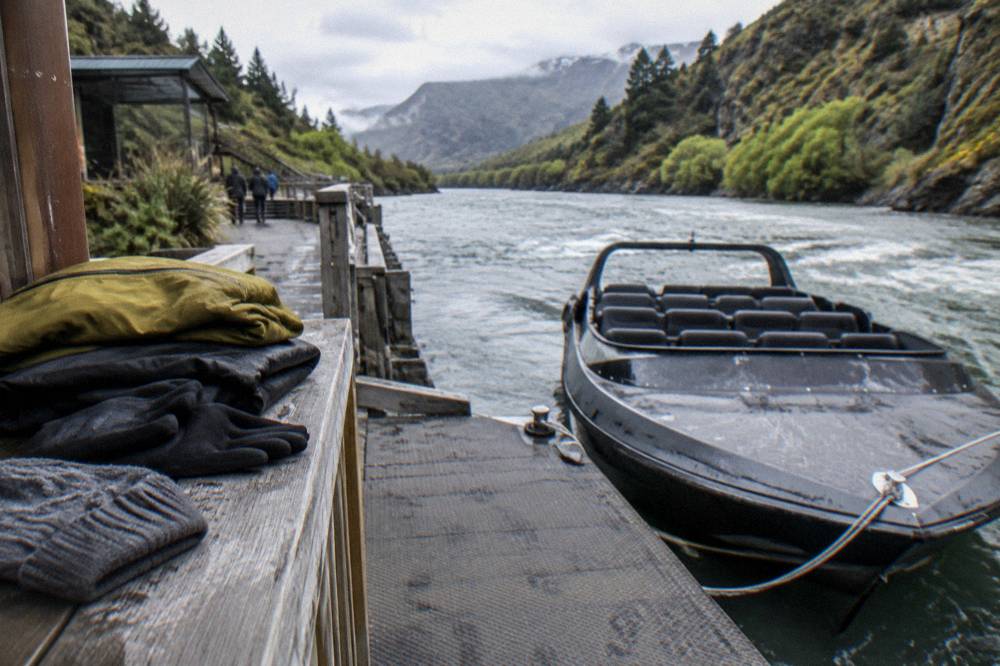
The comparison with the other big operators is worth knowing when packing. KJet does not provide spray jackets either, and its lake-and-rivers route means more wind-chill and occasional spray rather than canyon-style soaking. Skippers Canyon Jet provides both spray jackets and life jackets on its upper-canyon ride, which is a genuine clothing advantage for that trip. Anyone riding both the Shotover canyon trip and the KJet hour in one visit should pack the same shell for both and expect to want it more on the Shotover.
The tour at the centre of this question, the Extreme Jet Boat 25 Minutes ride, runs from 3 Arthurs Point Road at Arthurs Point, about 10 minutes drive from central Queenstown, from $115.79 per person, and the details are on the Shotover canyon ride page.
Can You Keep Your Phone And Camera Dry On A Queenstown Jet Boat?
Mostly, yes: Shotover Jet asks riders to keep phones and cameras in a zipped pocket while the boat is moving, allows only hands-free action cameras mounted on a head strap or hat clip, and provides complimentary lockers at the base for everything else. Chest mounts, wrist mounts and selfie sticks are not allowed. Photos and videos of rides are captured by the operator where possible, though the operator says media availability may vary, so a purchase should never be assumed.
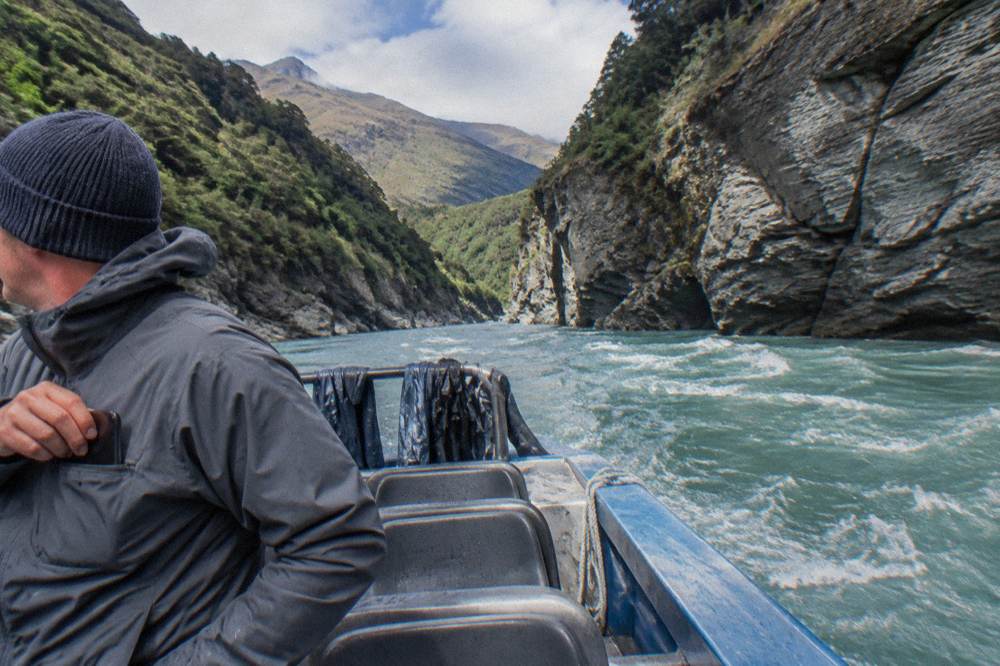
The phone question is the one that costs people money. A phone held out to film a spin is a phone aimed at the river, and the boats hit speeds up to 90 km/h, the operator says, which means a dropped phone is gone in a blink. The workable pattern is a zipped chest or jacket pocket for the phone, filming only while stationary or in the calm stretches, and a hands-free action camera on a head strap or hat clip for the ride itself. Head straps can be rented at the Shotover base for riders who do not own one.
The lockers remove the last excuse. Shotover Jet Beach at Arthurs Point has complimentary lockers, toilets, a shop and viewing areas, so there is no reason for a bag, a good camera or a spare jumper to ride at all. Anything taken on board is at the rider's own risk, and that wording is standard across the Queenstown jet boat fleet: KJet makes the same request, cameras stored while moving, and Skippers Canyon Jet locks belongings on the tour bus during the ride.
A small dry bag is worth packing. The Dart River funyak day provides a dry bag as part of its kit, wetsuit, booties, spray jacket and fleece included, but the pure jet rides provide only life jackets, so riders carrying medication, sunglasses or a spare layer on board should keep those in something sealed. Sunglasses in particular are a common casualty: spray plus wind will walk a loose pair off a face.
Which Jet Boat Rides Keep You Drier?
The hour-long KJet circuit across Lake Wakatipu and the Kawarau and Shotover rivers is generally the driest big ride, while the canyon rides, Shotover Jet and Skippers Canyon Jet, deliver the most concentrated spray, and the Dart River wilderness trip is the most weather-exposed overall. Driest is a relative term on a jet boat: every ride on this list can soak an outside seat. The difference is how much of the trip is spent spinning in shallow water versus cruising open water.
| Ride | Water | Spray level | Spray jacket provided | From price per person |
|---|---|---|---|---|
| Extreme Jet Boat, 25 Minutes (Shotover Jet) | Shotover River canyon | High, spins in shallow water | No | $115.79 |
| Skippers Canyon, 3 Hours | Shotover River upper canyons | High | Yes | $128.74 |
| KJet, Lake and Rivers, 1 Hour | Lake Wakatipu, Kawarau and Shotover rivers | Moderate, more wind than wall wash | No | $88.94 |
| Thunder Jet, Two Duration Options | Kawarau River | Moderate | Not stated on the booking page | $56.00 |
| Dart River Jet, 2 Hours | Braided Dart River | Weather-dependent | Not listed for the jet | $185.61 |
Reading the table honestly: the Skippers Canyon ride takes the sting out of the spray question by handing every rider a spray jacket before boarding, which matters most for families and winter bookings. The trade-off is time, the trip runs about 3 hours door to door including the minibus drive on Skippers Road, against the Shotover trip's 25 minutes on the water and roughly an hour all up if you drive yourself to the base. Both ride the Shotover River system, so the water temperature and the spin physics are the same. The rest of the planning pages sit on Queenstown Jet Boat Ride.
KJet's 60-minute ride from Main Town Pier covers the most water, the operator says 45 km across the lake and two rivers, and much of it is open-water running where spray is lighter. KJet's own note that centre seats are drier, and that seating cannot be guaranteed, applies equally here. The Thunder Jet ride on the Kawarau, from $56.00 per person, is the cheapest way onto the water and a reasonable pick for riders testing how much splash they enjoy before committing to a canyon trip.
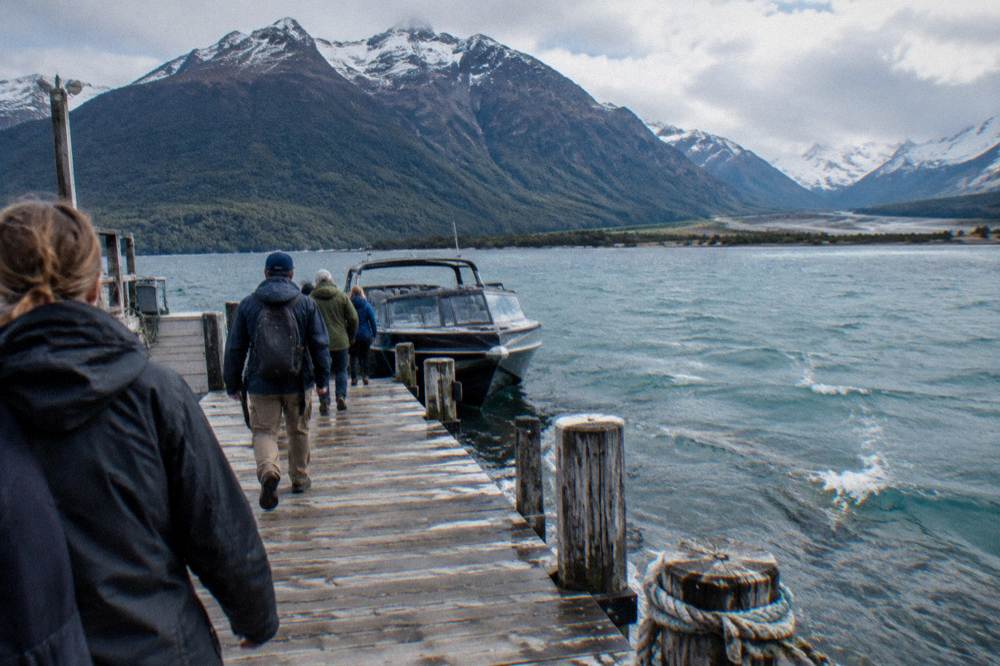
The Dart River trips are a different category of wet. The 2-hour wilderness jet from Glenorchy, from $185.61 per person, runs a braided glacier-fed river into Mount Aspiring National Park, where wind and rain rather than spray are the wetness risk; the funyak day, from $290.34 per person, supplies wetsuit, booties, spray jacket and fleece precisely because paddling a river means regular water. Riders choosing purely on dryness should pick KJet or Skippers; riders choosing on scenery have a harder call, and the Dart River versus Shotover Jet comparison works through it properly.
Does Seat Choice Change How Wet You Get?
Yes, where you sit makes a real difference to how wet you get: on every Queenstown jet boat, the centre seats and back rows catch noticeably less spray than the bow and outside seats, so sitting in the middle or towards the rear is the drier option, although no operator will guarantee you a particular seat before you board. KJet says centre seats are drier and adds that seating cannot be guaranteed. Asking nicely at check-in sometimes helps, and never binds.
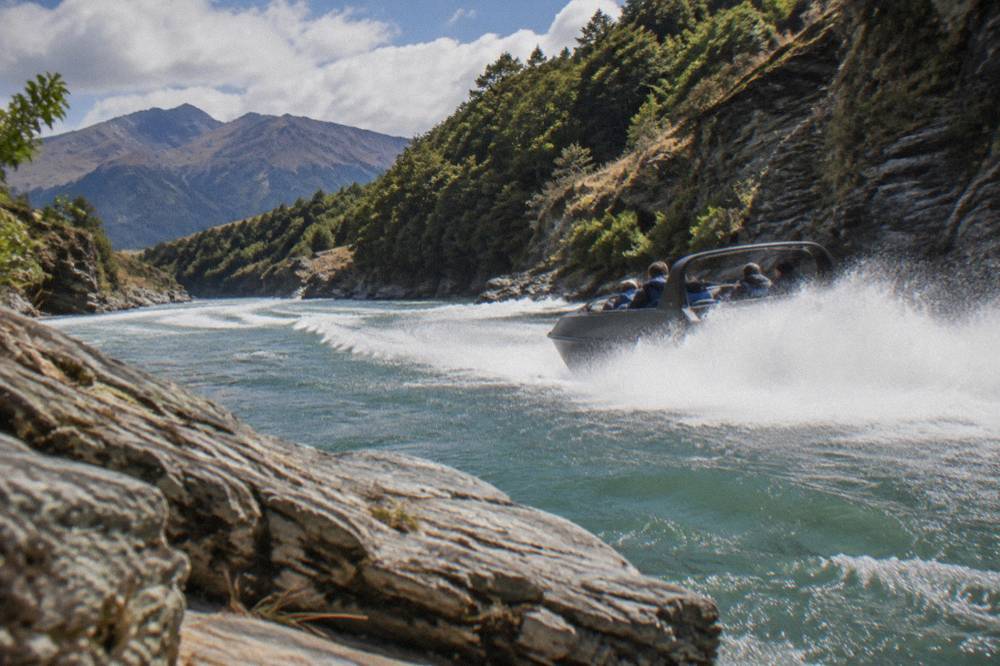
Weight balance is the reason the crew controls seating. A jet boat at speed trims differently depending on where the mass sits, and the driver wants the hull riding level through shallow water. A boat that is nose-heavy in 10 centimetres of water is a boat that cannot turn, so the crew distribute passengers first for safety and second for requests. Riders with a genuine reason to stay dry, a medical dressing, an expensive camera commitment, a long drive to a wedding, can state it at check-in and accept the answer.
The front seats are the glory seats and the wet seats at once. The canyon walls look best from the bow, the driver's line through the narrowest gaps is most visible there, and the spray arrives there first and hardest. Riders who want maximum spectacle and do not mind a soaked shoulder should ask for the front; riders who want the ride without the laundry should hope for the back. Both get the same 360 degree spins, the same scenery and the same speed, and nobody on board misses out on the canyons themselves.
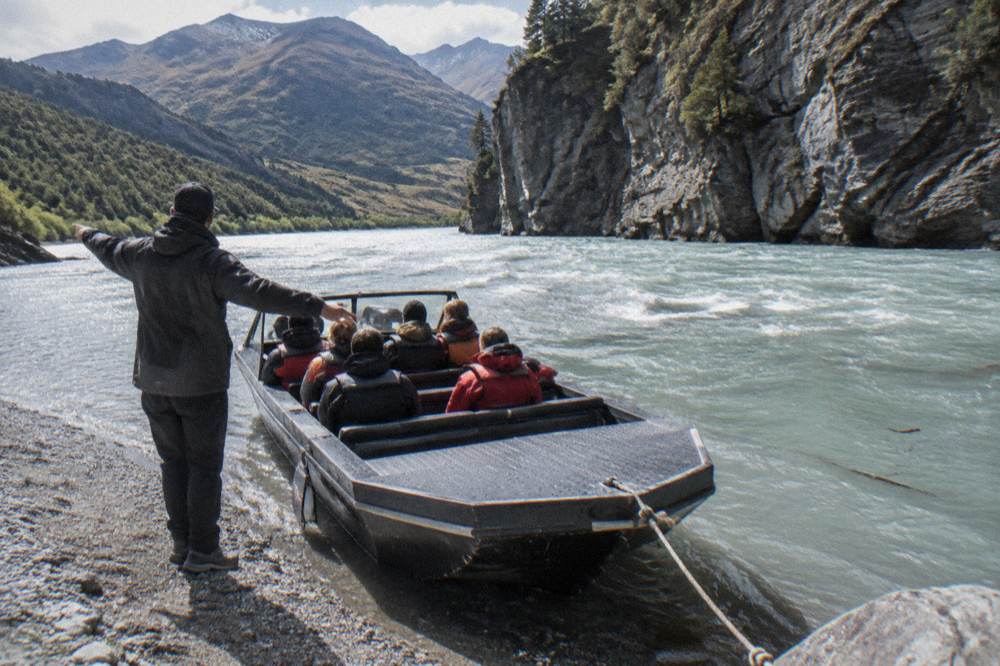
Families have slightly more influence than solo riders, because small children usually ride mid-boat beside a paying adult anyway. On the Shotover ride, children under 10 must ride in the same boat as a fare-paying adult aged 16 or over, and the minimum height is 1 metre, which the operator may raise to 1.2 metres when the river runs higher. KJet takes riders from age 2, with infants aged 2 to 4 riding free on a lap, one adult per infant, provided a life jacket fits. Those rules shape where the family sits more than any preference does.
Does Rain Before Your Ride Make The Boat Wetter?
No, not really. Rain before your ride mainly changes the river rather than the boat, and while a higher, faster Shotover can make for a bumpier trip, the spray you actually feel on board comes from the boat's own manoeuvres, not from falling water. You may get wetter in the sense of a rougher ride, but the water comes from the boat itself, not the sky. Shotover Jet runs its departures through the day, roughly 9.30am to 4pm, weather and river permitting, and cancels outright when conditions exceed its limits, offering a full refund or a new date.
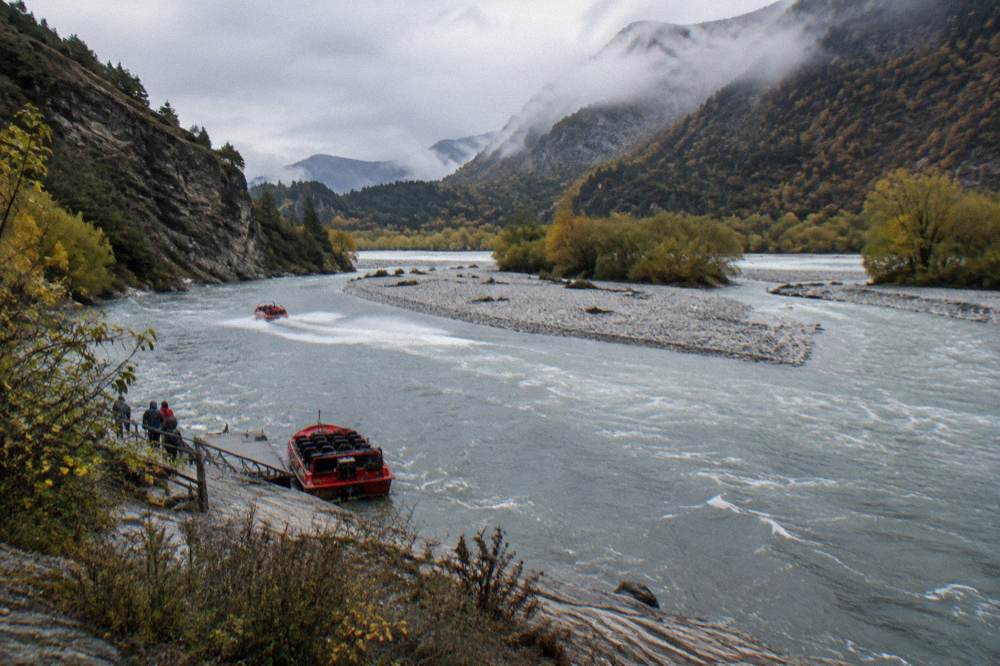
The river level does move the wetness dial indirectly. More water in the Shotover can lift the spray line and make each spin throw further, and it is the reason the operator can raise the minimum height from 1 metre to 1.2 metres in higher conditions. Less water in a braided river like the Dart changes the route itself, with the driver reading channels that shift week to week. None of this is predictable on the day of booking, which is why every operator reserves the right to judge the river on the morning.
The rain that does land on riders is mostly a clothing problem, and it is solved by the same waterproof layer already recommended for the spray. KJet runs 365 days a year, weather permitting, and sells an eco-poncho at its base for riders caught out, the operator says, though a proper shell is the better answer. Skippers Canyon hands out spray jackets that double as rain gear on the boat and the bus. Rain genuinely reshapes the Dart day: the ride does not operate in fog or torrential rain at all, so a sodden Glenorchy forecast is worth checking the night before.
Cancellation is the one wet-weather outcome worth planning for. Every ride covered here offers free cancellation up to 24 hours before for a full refund as its standard booking terms. If the operator cancels for weather or river conditions, Shotover Jet offers a full refund or a new date, KJet offers a new time or a full refund, and Dart River Adventures offers a refund; for Skippers, Thunder Jet, Oxbow, RealNZ and Kiwi Journeys the outcome is not stated. Riders holding a morning slot in a questionable forecast should decide before that 24-hour mark rather than after it, because inside the window the terms tighten and the choice disappears. The full picture on refunds, rebooking and river-level call-offs is in the Queenstown jet boat weather and cancellations guide.
Is Getting Wet On The Shotover Jet Worth It?
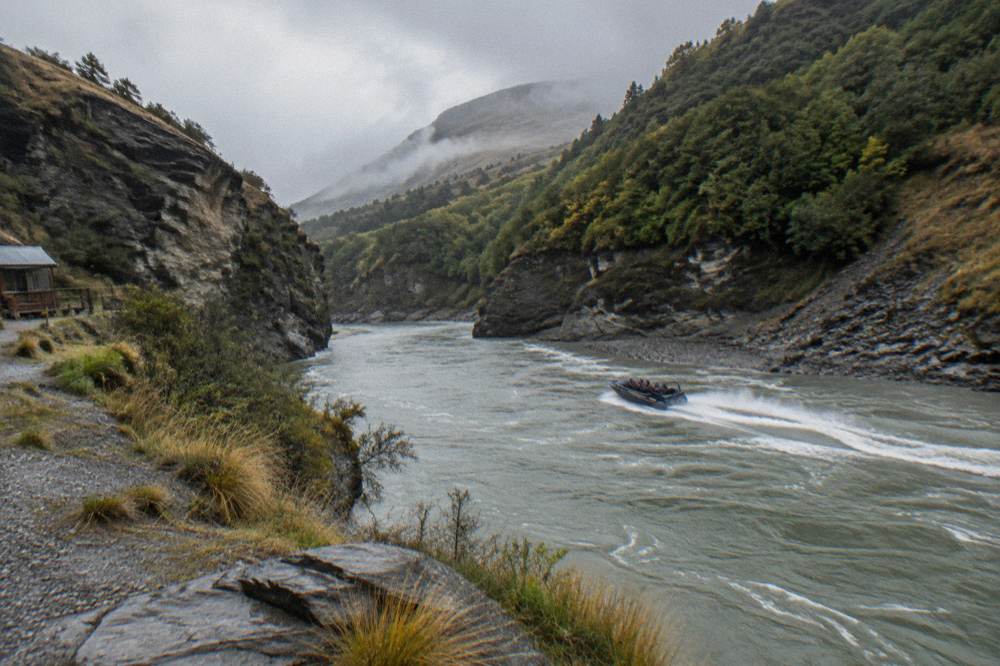
Almost always, yes: across 2,904 reviews the Shotover canyon ride rates 4.8, and reviewer Debbie_H calls the "close canyon walls and 360s" "a real thrill". At from $115.79 per person for about 25 minutes on the water, the ride is priced above KJet's from $88.94 and below the Dart trips, and it delivers the tightest canyon walls and the most concentrated manoeuvres of the town-based options. The wetness is a cost of the canyon, not a flaw in the product.
The value case works because the water and the walls are inseparable. The same shallow river that soaks the front rows is what lets the boat spin close to the canyon walls, and the operators' safety regime, Maritime Rules Part 82 requires commercial jet boat drivers on rivers to hold a Commercial Jet Driver licence and operators to display a current certificate, exists to let that kind of manoeuvring happen with a licensed driver at the wheel. Riders who accept the spray get the spectacle that the spray pays for. The operator's own site sells the ride on exactly those spins.
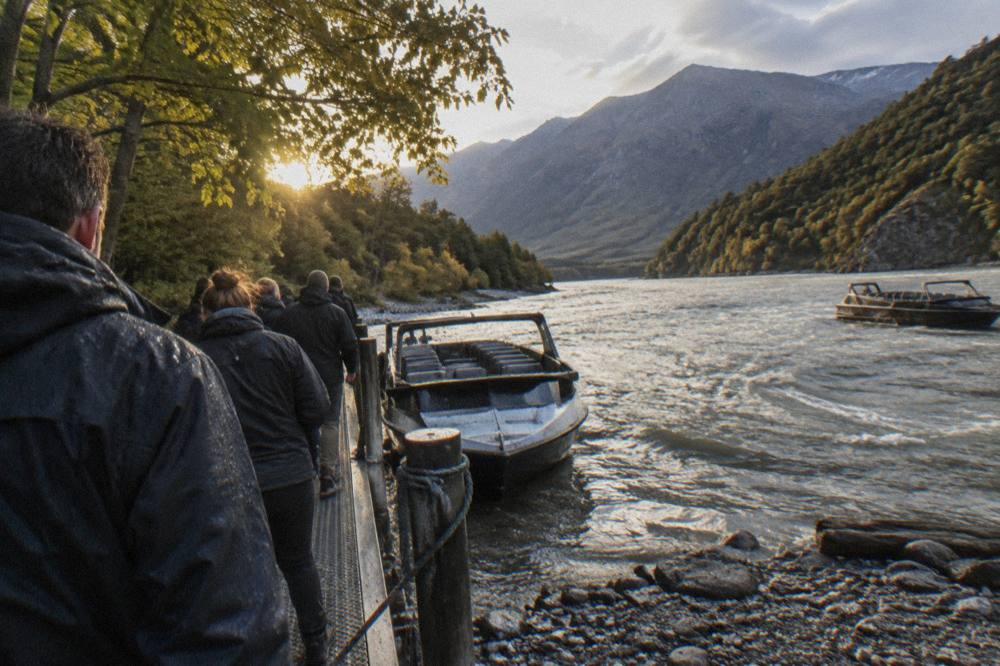
For riders genuinely unwilling to get splashed, the honest advice is to choose a different ride rather than a different seat. KJet's hour from Main Town Pier spends long stretches on open water where spray is lighter, and KJet provides the same life-jacket kit, though no spray jackets either. Skippers Canyon Jet hands every rider a spray jacket before the 25 minutes in the upper canyons, which is the closest thing to a dry guarantee on the Shotover system, though rental cars are not insured on Skippers Road so the bus is the way in, the operator states.
Planning around the wetness takes five minutes: book, check the 24-hour cancellation terms, pack a shell, and leave everything valuable in the free lockers. Riders who do that come off the boat grinning and damp, which is the intended result. The wider question of whether the ride justifies its price is taken apart in is a Shotover Jet worth it, with the numbers laid out.
For quick comparison, here again are the three rides this article keeps circling back to: the canyon original, the jacket-included upper-canyon trip, and the big lake-and-rivers hour.
Common Questions About Getting Wet On The Shotover Jet
Do You Get Wet On The Shotover Jet?
Yes, most riders get splashed and the front and outside seats often get properly wet during the 360 degree spins. The ride is splash and spray rather than a soaking, but a waterproof layer is essential because Shotover Jet does not provide spray jackets.
How Wet Do You Get On The Shotover Jet Canyon Ride?
Expect damp shoulders at minimum and a soaked sleeve or trouser leg on most rides, concentrated around the spins. Centre and rear seats stay drier, but seating cannot be guaranteed in advance.
Does The Shotover Jet Give You Spray Jackets?
No. Shotover Jet provides mandatory life jackets only. Riders need to bring their own waterproof layer, and there are free lockers at the base for a dry change of clothes.
Can You Bring A Phone On The Shotover Jet?
Yes, kept in a zipped pocket while the boat is moving. Only hands-free action cameras on a head strap or hat clip are permitted for filming, and head straps can be rented at the base.
Which Queenstown Jet Boat Ride Is The Driest?
The KJet hour across Lake Wakatipu and the Kawarau and Shotover rivers is generally the driest big ride, with more open-water running. Skippers Canyon Jet is the canyon alternative that provides spray jackets on its upper-canyon trip.
Do You Get Wetter On The Shotover Jet Than On KJet?
Usually yes. The Shotover ride spends its 25 minutes in the Shotover canyons, while KJet's 60-minute route includes long lake stretches where spray is much lighter.