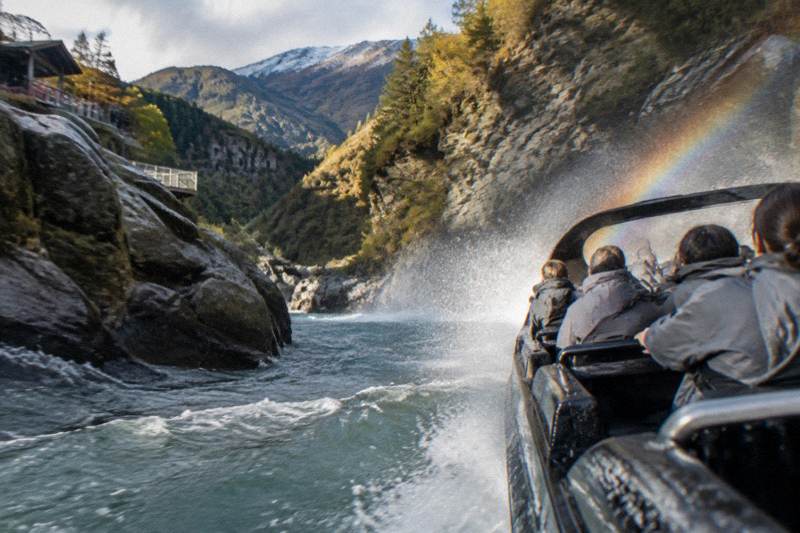
Where Was Jet Boating Invented?
Jet boating was invented in New Zealand by a Canterbury farmer and engineer. Here is how the invention spread to the Queenstown rivers you can ride today.
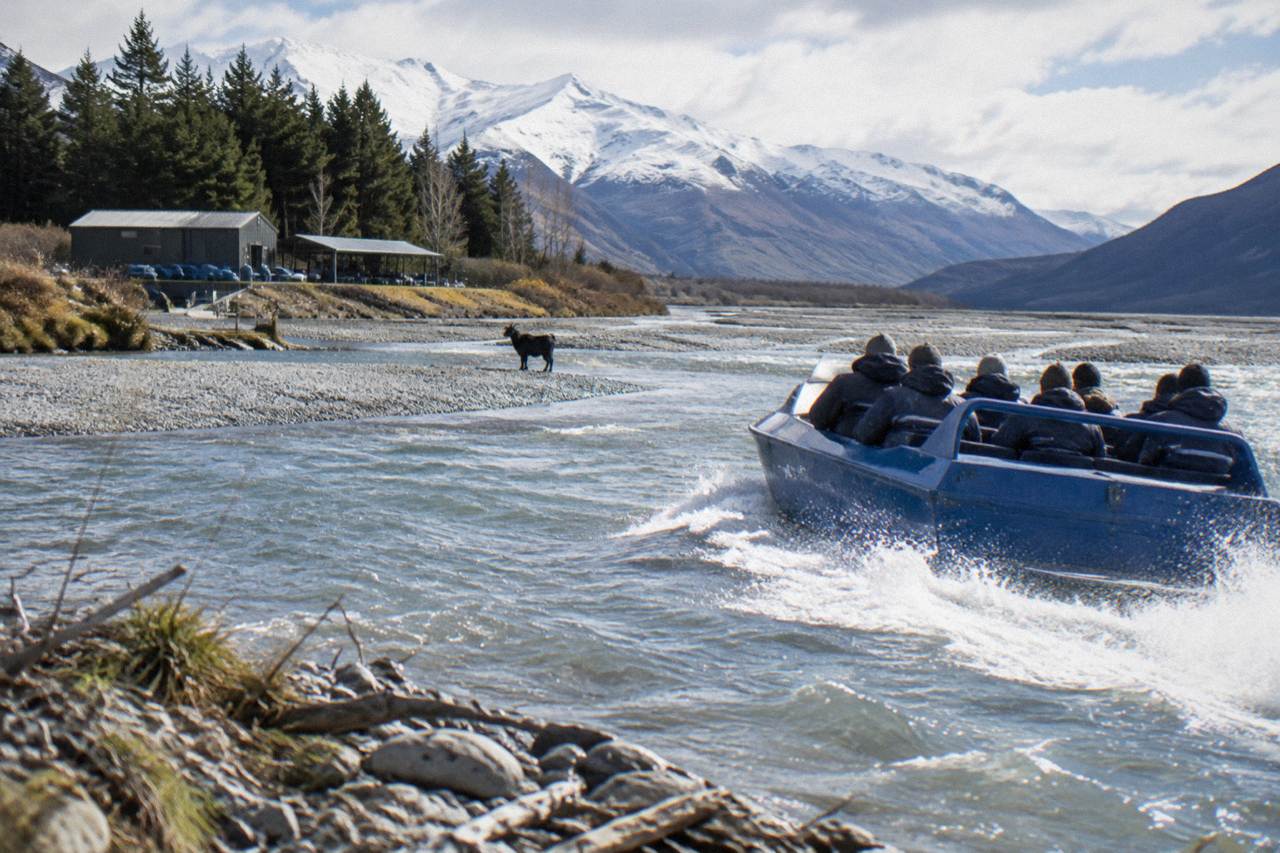
The invention came from a practical problem. New Zealand's South Island rivers are braided, steep and full of gravel shoals, and a conventional propeller strikes bottom long before the water gets interesting. The answer was to draw water up through an intake in the hull and expel it as a jet behind the boat, which removed the propeller, the rudder and the draught problem in one move. A boat with nothing beneath the hull but a smooth intake could skim water that would wreck an ordinary launch.
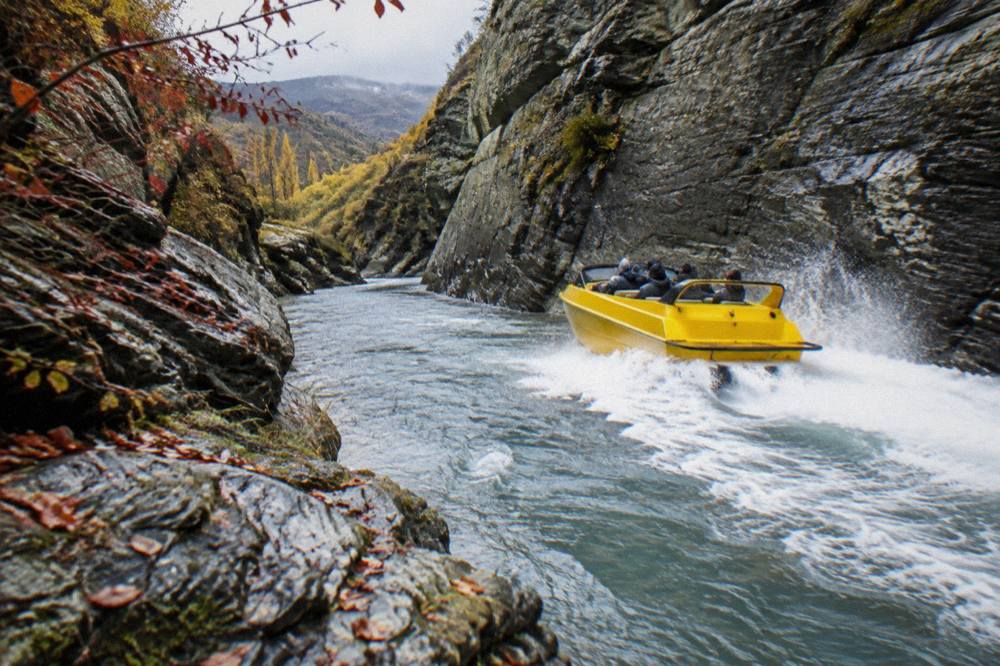
The detail worth holding onto is the scale of the consequence. A machine conceived so one farmer could travel his local shallow river now carries passengers up canyons barely wider than the boat, on rivers governed by maritime rules, district bylaws and concession areas, within an hour of a resort town. Queenstown did not invent jet boating, but it built the largest commercial scene around it, and the rides sold there today are direct descendants of that Canterbury workshop.
For a reader whose curiosity has a practical edge, three rides make a good first comparison: the hour-long KJet circuit of the lake and two rivers, the cheaper Thunder Jet options on the Kawarau, and the short, intense jet sprint at Gibbston.
Who Invented The Jet Boat And Why Canterbury?
The jet boat was invented in mid twentieth century Canterbury by a local farmer and engineer who wanted to navigate the shallow, shingle-bedded rivers of his own region, where propeller boats kept grounding. Canterbury gave him both the problem and the testing ground, and the design that solved it still powers every Queenstown ride.
The inventor's background mattered as much as his idea. He was an engineer who farmed, and the rivers he wanted to run were the wide, gravel braids of the Canterbury plains and high country, water that drops fast, shifts its channels and hides stones just under the surface. A propeller boat in that country is a lost cause, so the constraint itself shaped the invention: no external moving parts, minimal draught, steering by directing the jet stream rather than a rudder.
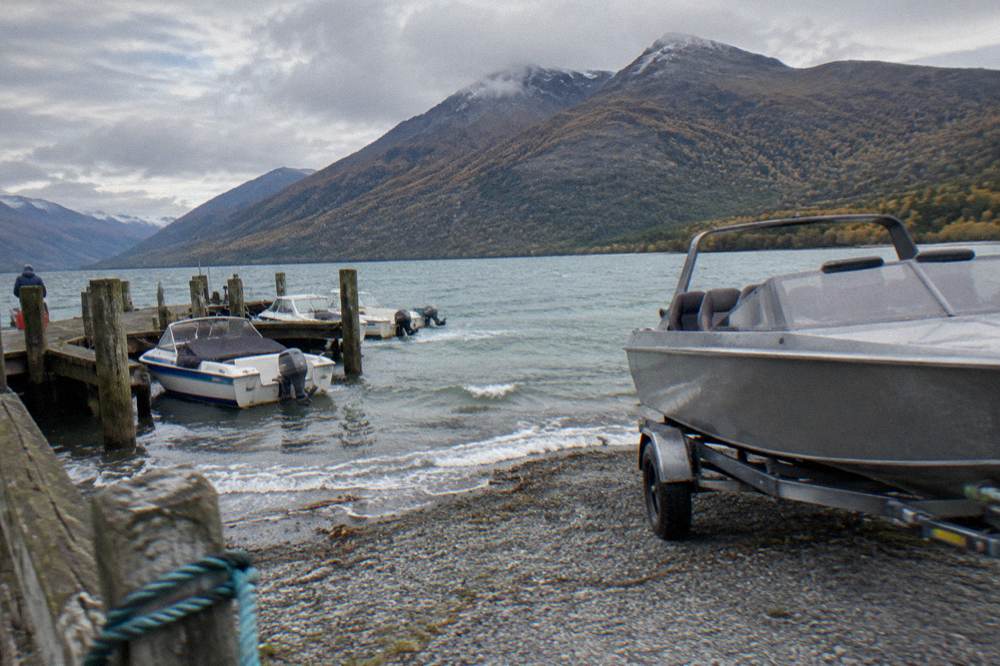
The unit of propulsion he settled on is a marine waterjet: an impeller inside the hull accelerates water through a nozzle, and the driver steers and reverses by deflecting that jet. Reversing works by dropping a deflector bucket over the nozzle, which redirects the thrust forward, letting the boat stop or spin almost within its own length. That reversal is the mechanical root of the 360 degree spins Queenstown drivers perform, and readers curious about the manoeuvre itself can read more in what a 360 spin actually is.
Canterbury kept its place in the story as the testing ground. The rivers there are shallow and fast in exactly the way the Shotover and the Dart are, so a design proven on Canterbury braids transferred naturally to Otago when commercial operators followed. Today the family of rides covered on this site runs on water the original invention was built to handle, from the canyon narrows above Arthurs Point to the glacier-fed braids of the Dart.
How Did Jet Boating Reach The Queenstown Rivers?
Jet boating reached the Queenstown area once the waterjet design proved commercial operators could run shallow rivers safely and profitably, and the Shotover River became the centre of the trade, with commercial rides on it running since 1965 per the operator. The Kawarau, the Dart and Lake Wakatipu followed, each with its own operator and base.
The spread followed the water. Shotover Jet Ltd runs from 3 Arthurs Point Road on that stretch, about a 10 minute drive from central Queenstown, while Skippers Canyon Jet runs the upper Shotover canyons, reached by a guided minibus drive on Skippers Road from the Station Building on Camp Street.
The Kawarau and the lake became the town-side option. KJet Queenstown leaves Main Town Pier on Marine Parade and ties Lake Wakatipu, the Kawarau River and the Shotover River into a single 60 minute ride, while Thunder Jet leaves from a kiosk at 88 Beach Street and Steamer Wharf. The Dart, 46 km away at Glenorchy, became the wilderness branch of the family, where Dart River Adventures runs a braided glacier-fed river into Mount Aspiring National Park, part of the Te Wahipounamu World Heritage area the operator describes as about 10 percent of New Zealand's land area.
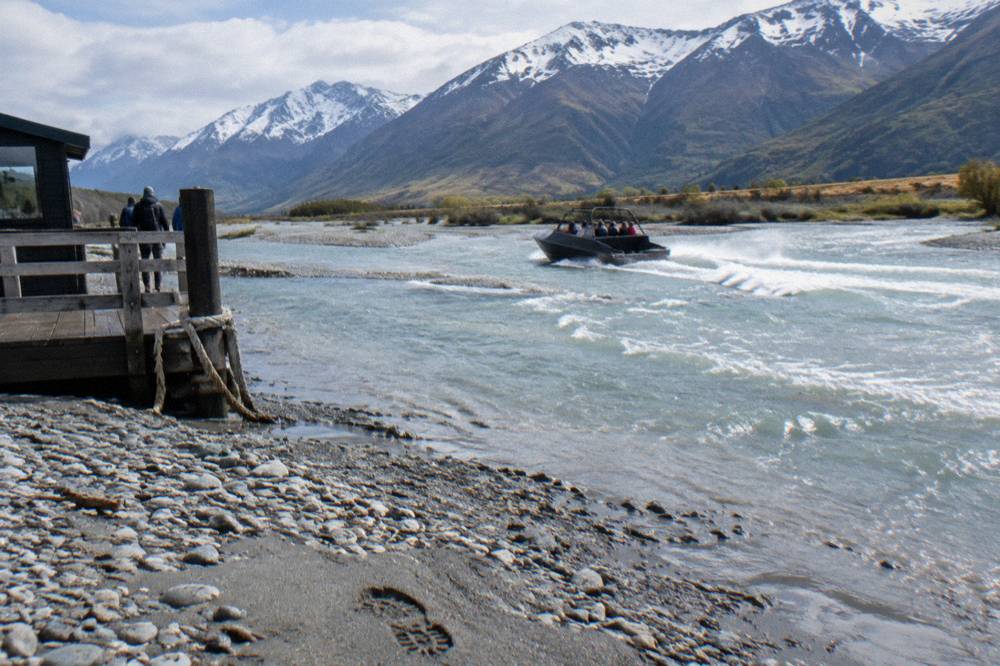
The regulatory layer matured alongside the trade. Commercial river jet boats in New Zealand operate under Maritime Rules Part 82, which requires drivers to hold a Commercial Jet Driver (River) Licence, requires the operator's certificate to be displayed on board, and has Maritime NZ inspecting boats and auditing operations. The Queenstown Lakes district council separately manages speed uplifts and concessions on the district's rivers, which is why commercial jets can travel at speed on stretches where recreational craft face a five knot limit near shore.
How Does A Jet Boat Actually Work?
A jet boat pulls water in through an intake flush with the hull, drives it with an internal impeller, and fires it out a steerable nozzle at the stern, so nothing protrudes below the boat. Steering and braking come from deflecting the jet itself, which lets the driver spin the boat within its own length.
That is the whole trick, but three consequences matter for a passenger. First, shallow water stops being a hazard and becomes a route, which is why operators advertise runs through water a few centimetres deep: KJet says its water can be less than 5 cm deep in places, and that figure belongs to KJet alone. Second, without a rudder the jet does the steering, so the driver controls direction with the nozzle and reverse thrust with a deflector bucket, making the tight canyon turns and the 360 degree spin possible at speed. The rest of the planning pages sit on Queenstown Jet Boat Ride.
Third, the absence of a propeller changes what the boat can do near swimmers, gravel banks and canyon walls, which is part of why commercial jet boating on narrow rivers became viable at all. Speeds are operator figures: Shotover Jet says its boats reach up to 90 km/h, KJet says up to 95 km/h, and Skippers Canyon Jet says its upper-canyon runs exceed 80 km/h. None of those numbers transfers to another ride, and each is the operator's own claim about its own boats. To compare what each Queenstown operator claims and see why a narrow canyon makes the same speed feel far quicker, the guide to jet boat speeds on Queenstown rivers covers each ride and the river it runs on.
| Operator | Speed claim (operator's own) | Signature manoeuvre | Base |
|---|---|---|---|
| Shotover Jet | Up to 90 km/h | 360 degree spins in the Shotover Canyons | 3 Arthurs Point Road, Arthurs Point |
| KJet | Up to 95 km/h | 360 degree spins across lake and two rivers | Main Town Pier, Marine Parade |
| Skippers Canyon Jet | In excess of 80 km/h | Upper Shotover canyons | Station Building, Camp Street |
Readers who want the numbers behind the speeds can go deeper with how fast New Zealand jet boats actually go, and the wider national picture sits in where to jet boat in New Zealand.
Where Can You Ride A Jet Boat In Queenstown Today?
Ten jet boat rides and jet boat combos covered here run from Queenstown and its surrounds, from $56.00 per person for the Thunder Jet options on the Kawarau to $290.34 per person for the Dart River funyak day, with a median of $145.21 across the ten. Four operators run through winter as well, so the invention is rideable in every season.
The menu divides cleanly by water. Canyon rides sit on the Shotover: the Shotover Jet ride itself, about 25 minutes on the water from $115.79, rated 4.8 across 2,904 reviews, the most reviewed ride on this site, and the Skippers Canyon tour, a 3 hour trip from $128.74 including the minibus drive in and out, rated 4.9 across 744 reviews. Lake and river rides leave from town: KJet's hour from $88.94, rated 4.7 across 2,026 reviews, and Thunder Jet's 25 minute or 1 hour options from $56.00, rated 4.8 across 257 reviews. At Gibbston, about 20 minutes from Queenstown Airport and just past Nevis Bluff, Oxbow Adventure Co runs a 10 minute jet sprint from $84.53 and a 45 minute jet sprint plus off-roading combo from $161.68, the latter rated 5.0 across 45 reviews.
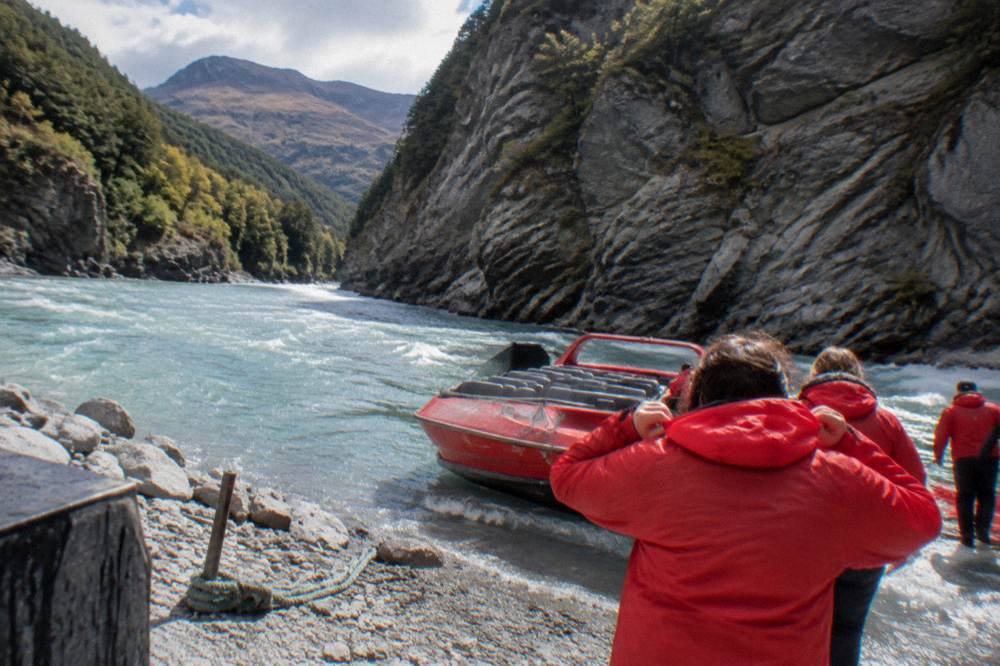
The Dart River rides from Glenorchy are the wilderness wing: a 2 hour jet trip from $185.61, rated 4.8 across 607 reviews, and the funyak day from $290.34, rated 4.8 across 382 reviews. Combos fill the gaps: a RealNZ rafting and jet boat pairing on the Kawarau from $186.64, rated 4.9 across 183 reviews, and a new Kiwi Journeys day pairing the Shotover ride with an eBike leg, the Kawarau Zipride and a wine tasting, from $282.00. That last one is a new listing with no reviews yet, so no star rating can be printed for it.
| Ride | Water | Total duration | From, per person | Rating and reviews |
|---|---|---|---|---|
| Extreme Jet Boat, 25 Minutes | Shotover River canyon | 25 minutes | $115.79 | 4.8 from 2,904 reviews |
| Skippers Canyon, 3 Hours | Shotover River upper canyons | 3 hours | $128.74 | 4.9 from 744 reviews |
| KJet, Lake and Rivers, 1 Hour | Lake Wakatipu, Kawarau, Shotover | 1 hour | $88.94 | 4.7 from 2,026 reviews |
| Thunder Jet, Two Duration Options | Kawarau River | 25 minutes or 1 hour | $56.00 | 4.8 from 257 reviews |
| Jet Sprint, 10 Minutes | Gibbston | 10 minutes | $84.53 | 4.9 from 16 reviews |
| Dart River Jet, 2 Hours | Dart River braids | 2 hours | $185.61 | 4.8 from 607 reviews |
| Funyak Canoe, Meal Included | Dart River | 8 hours 30 minutes | $290.34 | 4.8 from 382 reviews |
| Rafting and Jet Boat Combo | Kawarau River | 4 hours 30 minutes | $186.64 | 4.9 from 183 reviews |
| Jet Sprint and Off-Road, 45 Minutes | Gibbston | 45 minutes | $161.68 | 5.0 from 45 reviews |
| Shotover Jet, eBike and Zipride | Shotover River | 8 hours | $282.00 | New listing, no reviews yet |
The canyon classic among these is the Shotover ride, which carries up to 14 passengers per boat and departs through the day from its Arthurs Point base.
Which Queenstown Ride Suits A First Timer?
A first timer wanting the invention in its purest, cheapest form should take the Thunder Jet options on the Kawarau from $56.00; wanting the most water under the hull, the KJet hour from $88.94 covering a lake and two rivers; wanting canyons and spins, the Shotover ride from $115.79. All three allow free cancellation up to 24 hours before for a full refund.
Budget and time usually decide it. Thunder Jet's listing offers 25 minutes or a full hour on the Kawarau, from a kiosk at Steamer Wharf, so it works between other town activities. KJet costs more but spends a full 60 minutes on the water and crosses three waterways, which suits a reader who came for the scenery as much as the speed. The Shotover ride is the canyon experience, 25 minutes of narrow rock walls and spins, and the whole visit runs about 1 hour if you drive yourself to the river base.
Families should check the age and height rules per ride, since they differ by operator: the KJet ride takes ages 2 and up with no height limit, the Shotover ride has no minimum age but a 1 m height minimum, and the Dart jet takes children from 3 years and 100 cm. Child fares have age bands that differ by operator, so check the booking page for the ride you want. A fuller breakdown sits in the age, weight and health rules guide.
What you wear matters more than most first timers expect. The general packing advice, including camera rules that allow only hands-free mounts, is in what to wear on a Shotover Jet ride.
For the three-waterway hour that best traces the invention's home geography, the KJet circuit remains the pick from central Queenstown.
What Should You Know Before Booking?
Before booking, know the start point of your ride, since they differ across seven locations, and know the cancellation wording: all ten rides allow free cancellation up to 24 hours before for a full refund. If an operator cancels for weather or river conditions, Shotover Jet offers a full refund or a new date, KJet offers a new time or a full refund, and Dart River Adventures offers a refund; for Skippers, Thunder Jet, Oxbow, RealNZ and Kiwi Journeys it is not stated. Operator terms for direct bookings can differ, so read the terms on the booking page.
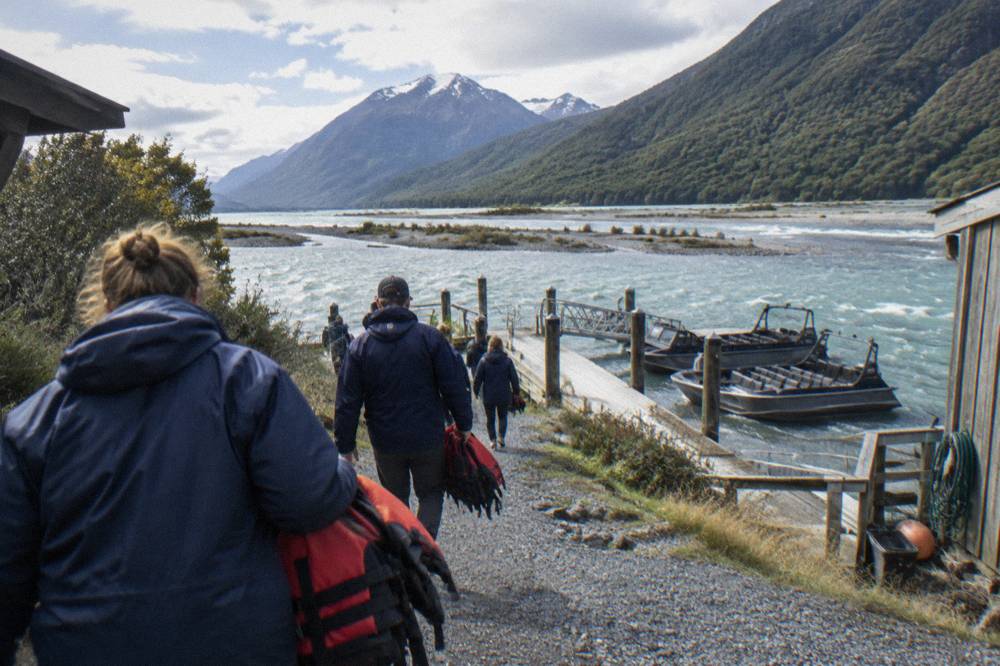
Start points are the detail that catches people out. The Shotover base is Arthurs Point; KJet leaves Main Town Pier; Skippers leaves from the Camp Street side of the Station Building; Dart rides start at Glenorchy, 46 km and about 45 minutes from Queenstown; Oxbow sits at 2696 Gibbston Highway; RealNZ meets at 88 Beach Street; Thunder Jet runs from the Steamer Wharf kiosk. Only four rides on this site include transport from town: the Skippers bus from the Station Building, the Dart wilderness jet on selected departures, the funyak with a selectable shuttle, and the eBike and Zipride day. The operator runs a Shotover shuttle from the Station Building on selected departures, so arrange the seat with the operator if you are not driving.
Weather policy matters more than the forecast. Rides run weather and river permitting, and no listing promises river level, spins on every trip, a particular seat or photos, so treat anything beyond the ride itself as a bonus rather than a promise. The practical detail is in how rain affects a Queenstown jet boat ride, and the seasonal angle, including that winter days end with mid afternoon departures, is covered in when to jet boat in Queenstown.
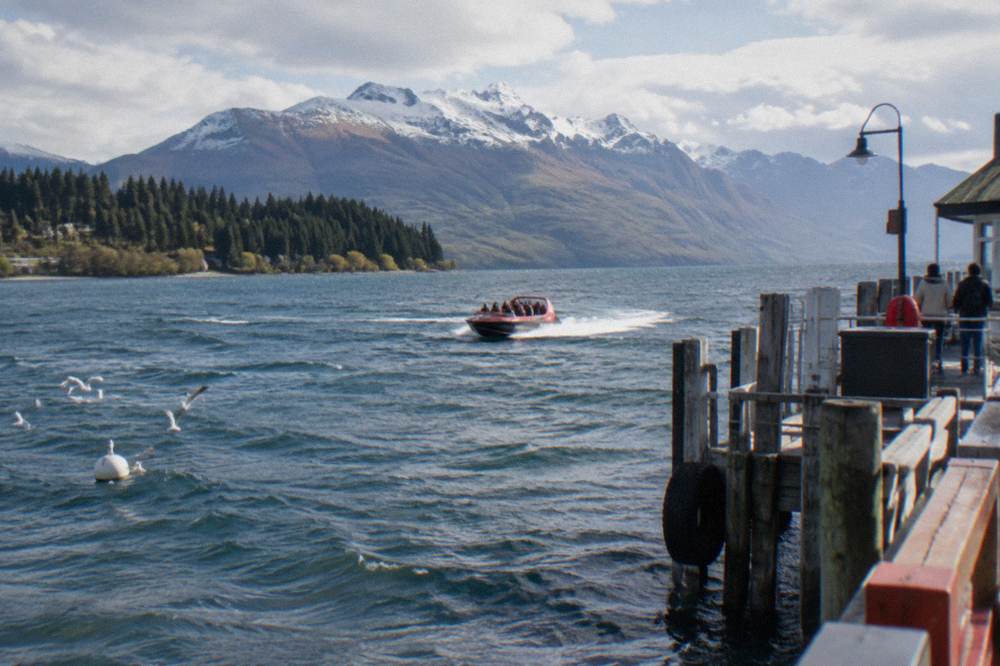
The safety framework is worth one paragraph of any origin story, because it is what let a farm invention become a passenger trade. Dart River Adventures states it holds a Maritime NZ Jet Boat Operator Certificate and is audited against Part 82 of the Maritime Rules; the same rules require licensed drivers and displayed certificates across the commercial fleet. More on the local record sits in how safe jet boating is, and for planning the whole day around a ride, the Queenstown jet boat day plan stacks well.
Readers ready to compare the three rides that trace this story most directly, the lake and rivers hour, the budget Kawarau options and the Gibbston sprint, can check them side by side.
Common Questions About Where Jet Boating Was Invented
Where Was Jet Boating Invented?
In New Zealand, in the Canterbury region of the South Island, in the mid twentieth century. The inventor was a Canterbury farmer and engineer who built a propeller-free boat to run the shallow, gravel-bedded rivers around him, and that design spread to the Queenstown rivers, where ten commercial rides now operate.
Who Invented The Jet Boat?
The jet boat was invented in the mid twentieth century by a Canterbury farmer and engineer. His waterjet design pulls water through a hull intake and expels it as a steerable jet, which is why the boats can run very shallow rivers and spin within their own length.
Why Was The Jet Boat Invented In New Zealand?
Because the country's South Island rivers are shallow, fast and full of gravel, conditions that destroy propeller boats. The inventor needed to navigate exactly that kind of water where he farmed, so the invention solved a local problem that happened to exist across the whole region, including the Shotover, Kawarau and Dart rivers.
Can You Still Ride The Kind Of Boat That Was Invented Back Then?
Yes, every commercial jet boat ride in Queenstown uses the same principle: an internal waterjet with no propeller below the hull. Rides run from $56.00 per person on the Kawarau to $290.34 for the Dart funyak day, with free cancellation up to 24 hours before for a full refund on all ten listings.
Is Queenstown The Home Of Jet Boating?
No, Canterbury is where jet boating was invented, but Queenstown became its busiest commercial centre. The Shotover canyon ride alone has 2,904 reviews at 4.8, and rides run on the Shotover, the Kawarau, Lake Wakatipu, the Dart and at Gibbston, with the main operators running through winter as well.